2018/02/10

Roadster, Starman, Planet Earth


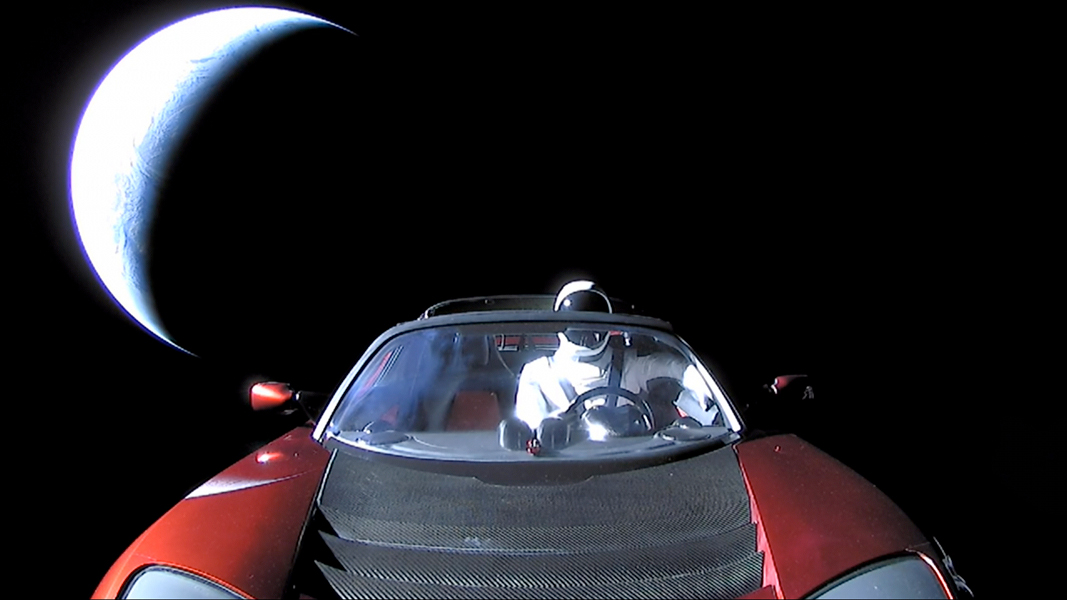
Don't panic. It's just a spacesuited mannequin named Starman. As the sunlit crescent of planet Earth recedes in the background, Starman is comfortably seated at the wheel of a Tesla Roadster in this final image of the payload launched by a Falcon Heavy rocket on February 6. Internationally designated 2018-017A, roadster and Starman are headed for space beyond the orbit of Mars. The successful Falcon Heavy rocket has now become the most powerful rocket in operation and the roadster one of four electric cars launched from planet Earth. The other three were launched to the Moon by historically more powerful (but not reusable) Saturn V rockets. Still, Starman's roadster is probably the only one that would be considered street legal. via NASA http://ift.tt/2C9n06N

2018/02/09

A View of the Winter Olympics From Above


Since the Winter Olympics were first held in 1924, they only have been hosted twice in Asia, both times in Japan. This year the games will find a new home in South Korea, in the northeastern cities of Pyeongchang and Gangneung, visible in this natural-color image acquired on Jan. 26, 2018. via NASA http://ift.tt/2EuqiXl

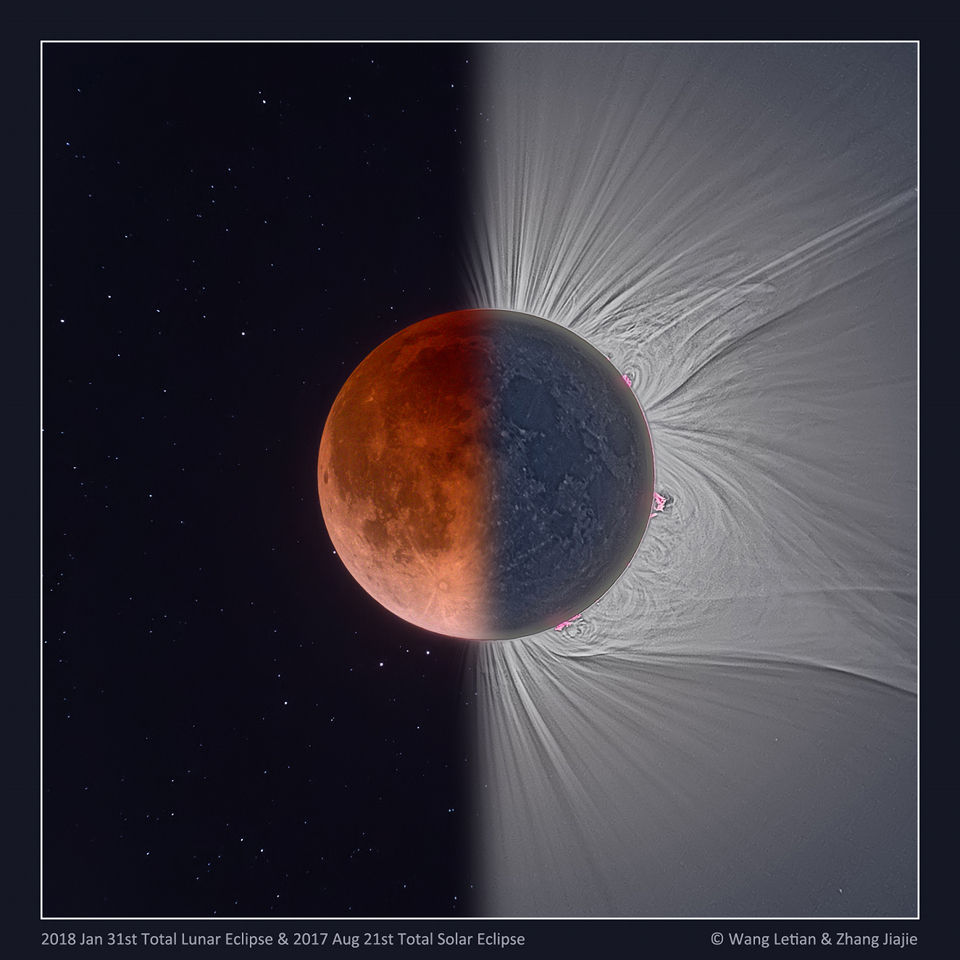
Total Solar Lunar Eclipse


This digitally processed and composited picture creatively compares two famous eclipses in one; the total lunar eclipse (left) of January 31, and the total solar eclipse of August 21, 2017. The Moon appears near mid-totality in both the back-to-back total eclipses. In the lunar eclipse, its surface remains faintly illuminated in Earth's dark reddened shadow. But in the solar eclipse the Moon is in silhouette against the Sun's bright disk, where the otherwise dark lunar surface is just visible due to earthshine. Also seen in the lunar-aligned image pair are faint stars in the night sky surrounding the eclipsed Moon. Stunning details of prominences and coronal streamers surround the eclipsed Sun. The total phase of the Great American Eclipse of August 21 lasted about 2 minutes or less for locations along the Moon's shadow path. From planet Earth's night side, totality for the Super Blue Blood Moon of January 31 lasted well over an hour. via NASA http://ift.tt/2H0ceDv

2018/02/08

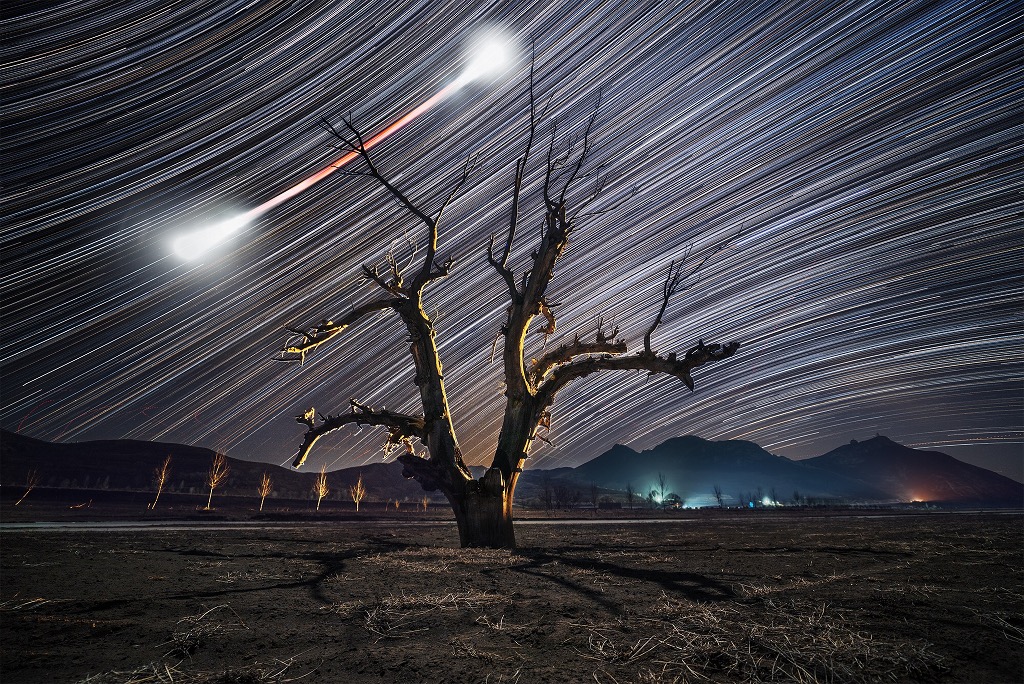
Bow Tie Moon and Star Trails


On January 31, a leisurely lunar eclipse was enjoyed from all over the night side of planet Earth, the first of three consecutive total eclipses of the Moon. This dramatic time-lapse image followed the celestial performance for over three hours in a combined series of exposures from Hebei Province in Northern China. Fixed to a tripod, the camera records the Full Moon sliding through a clear night sky. Too bright just before and after the eclipse, the Moon's bow tie-shaped trail grows narrow and red during the darker total eclipse phase that lasted an hour and 16 minutes. In the distant background are the colorful trails of stars in concentric arcs above and below the celestial equator. via NASA http://ift.tt/2nMd7aI

2018/02/07

Columbus: Celebrating 10 Years of Science on Station


The European Space Agency's Columbus module celebrates 10 years of science on the International Space Station. via NASA http://ift.tt/2nJ2424

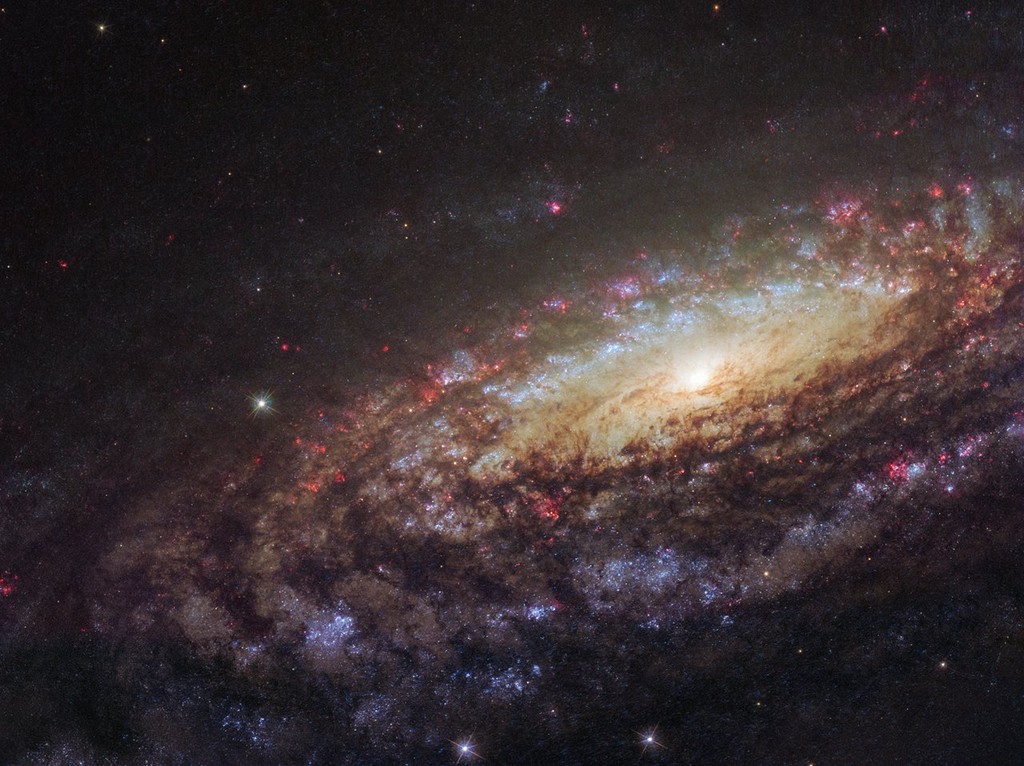
NGC 7331 Close Up


Big, beautiful spiral galaxy NGC 7331 is often touted as an analog to our own Milky Way. About 50 million light-years distant in the northern constellation Pegasus, NGC 7331 was recognized early on as a spiral nebula and is actually one of the brighter galaxies not included in Charles Messier's famous 18th century catalog. Since the galaxy's disk is inclined to our line-of-sight, long telescopic exposures often result in an image that evokes a strong sense of depth. In this Hubble Space Telescope close-up, the galaxy's magnificent spiral arms feature dark obscuring dust lanes, bright bluish clusters of massive young stars, and the telltale reddish glow of active star forming regions. The bright yellowish central regions harbor populations of older, cooler stars. Like the Milky Way, a supermassive black hole lies at the core of of spiral galaxy NGC 7331. via NASA http://ift.tt/2nSqeqm

2018/02/06

December 2006: Constructing the Space Station


NASA astronaut Robert Curbeam works on the International Space Station's S1 truss during the space shuttle Discovery's STS-116 mission in Dec. 2006. via NASA http://ift.tt/2BHlv4a

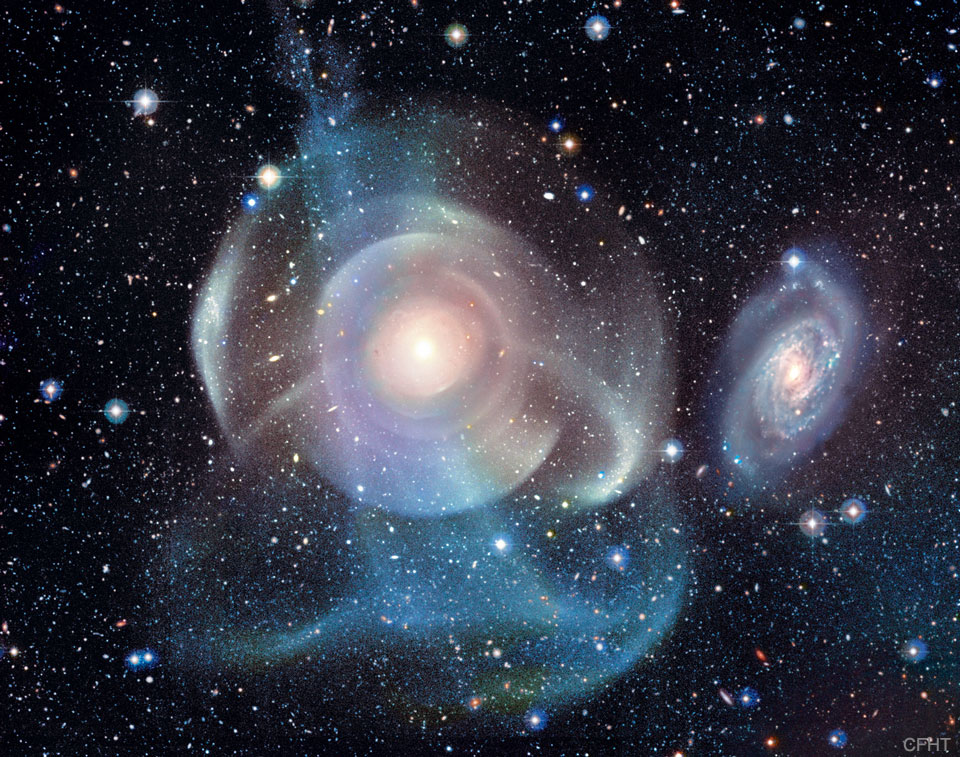
Galaxy NGC 474: Shells and Star Streams


What's happening to galaxy NGC 474? The multiple layers of emission appear strangely complex and unexpected given the relatively featureless appearance of the elliptical galaxy in less deep images. The cause of the shells is currently unknown, but possibly tidal tails related to debris left over from absorbing numerous small galaxies in the past billion years. Alternatively the shells may be like ripples in a pond, where the ongoing collision with the spiral galaxy just above NGC 474 is causing density waves to ripple through the galactic giant. Regardless of the actual cause, the featured image dramatically highlights the increasing consensus that at least some elliptical galaxies have formed in the recent past, and that the outer halos of most large galaxies are not really smooth but have complexities induced by frequent interactions with -- and accretions of -- smaller nearby galaxies. The halo of our own Milky Way Galaxy is one example of such unexpected complexity. NGC 474 spans about 250,000 light years and lies about 100 million light years distant toward the constellation of the Fish (Pisces). via NASA http://ift.tt/2E2NEQx

2018/02/05

A Lunar Tribute to Former NASA Chief Exploration Scientist


Lunar crater is named after former NASA chief exploration scientist. via NASA http://ift.tt/2GN1wAh

2018/02/04

Venus and the Triply Ultraviolet Sun


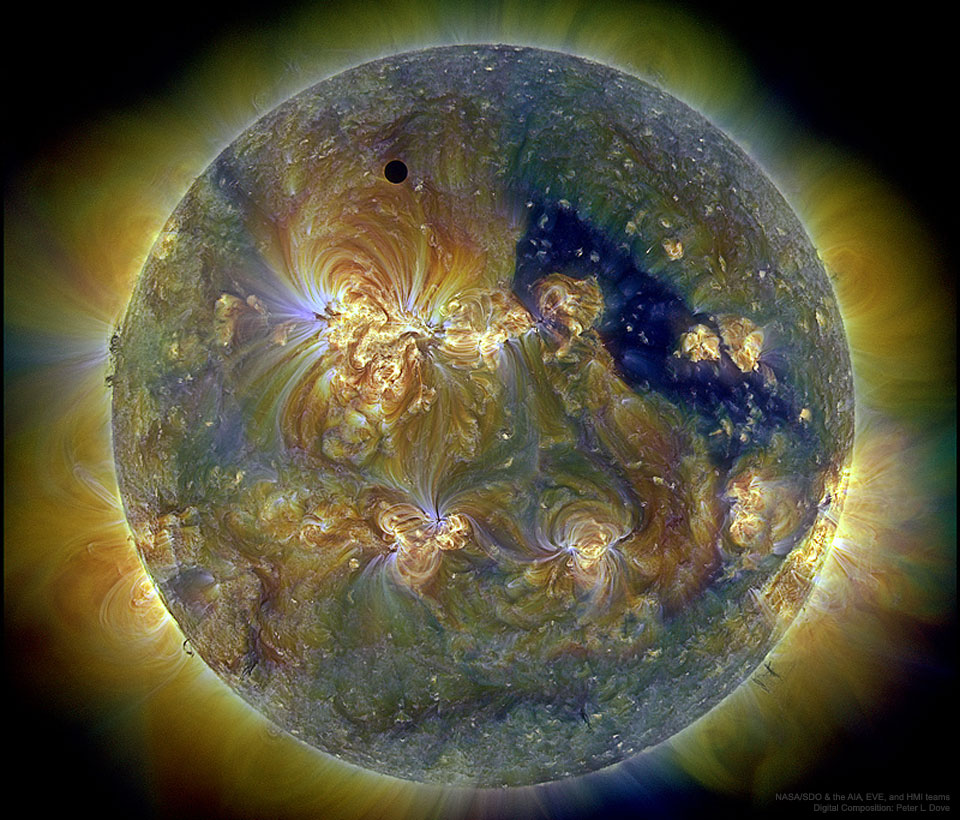
An unusual type of solar eclipse occurred in 2012. Usually it is the Earth's Moon that eclipses the Sun. That year, most unusually, the planet Venus took a turn. Like a solar eclipse by the Moon, the phase of Venus became a continually thinner crescent as Venus became increasingly better aligned with the Sun. Eventually the alignment became perfect and the phase of Venus dropped to zero. The dark spot of Venus crossed our parent star. The situation could technically be labeled a Venusian annular eclipse with an extraordinarily large ring of fire. Pictured here during the occultation, the Sun was imaged in three colors of ultraviolet light by the Earth-orbiting Solar Dynamics Observatory, with the dark region toward the right corresponding to a coronal hole. Hours later, as Venus continued in its orbit, a slight crescent phase appeared again. The next Venusian transit across the Sun will occur in 2117. via NASA http://ift.tt/2s6x54v

2018/02/03

Earthshadow and the Beehive


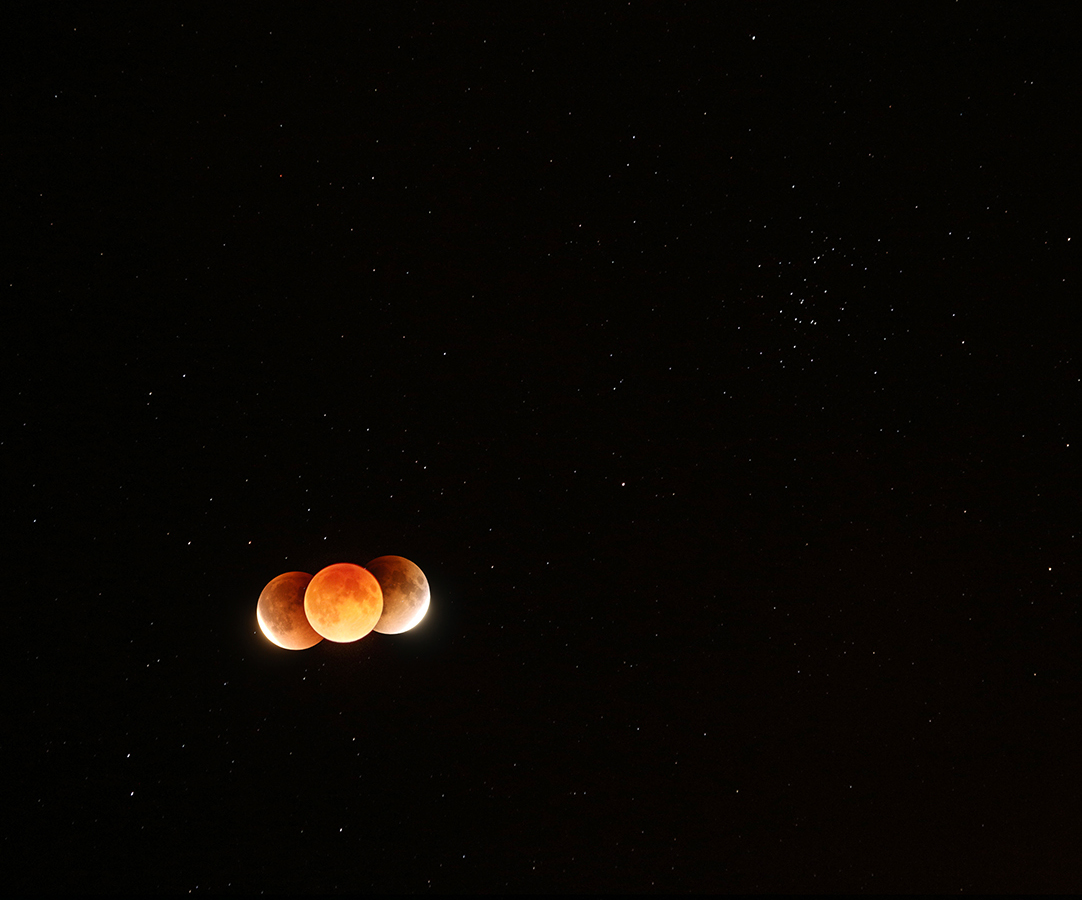
The Earth's dark umbral shadow is shaped like a cone extending into space. Of course its circular cross section at the distance of the Moon is more easily seen during a lunar eclipse. In fact, in this composite telephoto image from Earth's night side on January 31, the Earth's shadow has taken on a reddish tinge. The extent of the shadow along the lunar orbit is illustrated by aligning three frames taken just before the start, near the middle of, and just after the end of the total eclipse phase that lasted about 76 minutes. At the upper right and more easily seen during the eclipse's darker total phase is M44, one of the closest large star clusters. A mere 600 light-years away, M44 is also known as the Praesepe or the Beehive Cluster. via NASA http://ift.tt/2BRYrLl

2018/02/02

Observations From -369.7 Degrees Fahrenheit


Taken from inside Chamber A at the Johnson Space Center in September 2017, this image shows the James Webb Space Telescope as it was undergoing cryogenic testing and the temperature was approximately -369.7 degrees Fahrenheit. via NASA http://ift.tt/2BNJqu1

Moonrise Eclipse


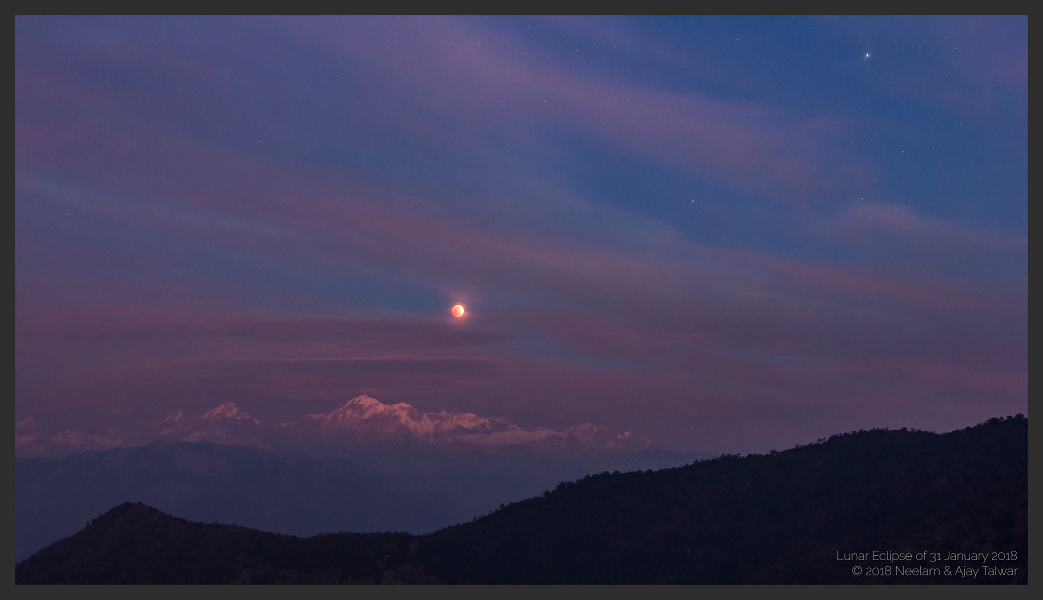
This atmospheric picture of a distant horizon looks toward the tall Trisul peaks of India's snowy Himalayan mountains. Taken from a remote location on January 31, brightest star Sirius shines at the upper right. The red Moon rising is gliding through Earth's shadow during the evening's much anticipated total lunar eclipse. Enjoyed across the planet's night side, the eclipse was the first of two total lunar eclipses in 2018, kicking off a good year for moonwatchers. But this was a rare treat. The eclipsed Moon also loomed large near perigee, the closest point in its orbit, during the second Full Moon of the month, also known as a Blue Moon. For the July 27, 2018 total lunar eclipse, the Full Moon will be very near apogee. via NASA http://ift.tt/2EaQqqp

2018/02/01

Helping to Create the Future of Space Travel


Dr. Lonnie Reid had a long and storied career at NASA's Glenn Research Center. His expertise in the internal flow of advance aerospace propulsion system was nationally recognized and he was influential in recruiting and mentoring the next generation of scientists and engineers. via NASA http://ift.tt/2E7noYk

International Space Station Transits the Full Moon


The International Space Station, with a crew of six onboard, is seen in silhouette as it transits the moon at roughly five miles per second on Tuesday, Jan. 30, 2018. via NASA http://ift.tt/2DRQEDi

2018/01/31

The First Explorer


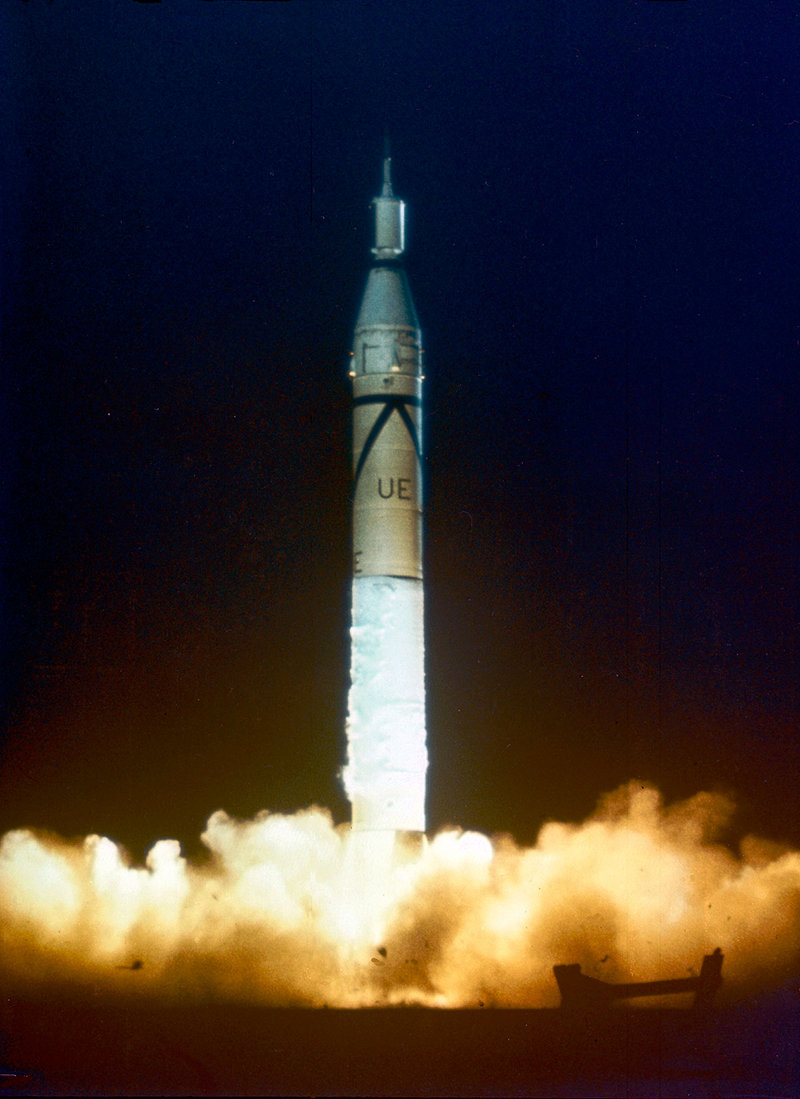
Sixty years ago, on January 31, 1958, the First Explorer was successfully launched by the Army Ballistic Missile Agency on a Jupiter-C rocket. Inaugurating the era of space exploration for the United States, Explorer I was a thirty pound satellite that carried instruments to measure temperatures, and micrometeorite impacts, along with an experiment designed by James A. Van Allen to measure the density of electrons and ions in space. The measurements made by Van Allen's experiment led to an unexpected and then startling discovery of two earth-encircling belts of high energy electrons and ions trapped in the magnetosphere. Now known as the Van Allen Radiation belts, the regions are located in the inner magnetosphere, beyond low Earth orbit. Explorer I ceased transmitting on February 28, 1958, but remained in orbit until March of 1970. via NASA http://ift.tt/2Gxjab3

2018/01/30

Saying Goodnight


Astronaut Mark Vande Hei took this image of the eastern U.S. and Canada at night, writing, "Good night from @Space_Station. DC, NY, Toronto, Cleveland, and surrounding areas!" via NASA http://ift.tt/2BDVLRC

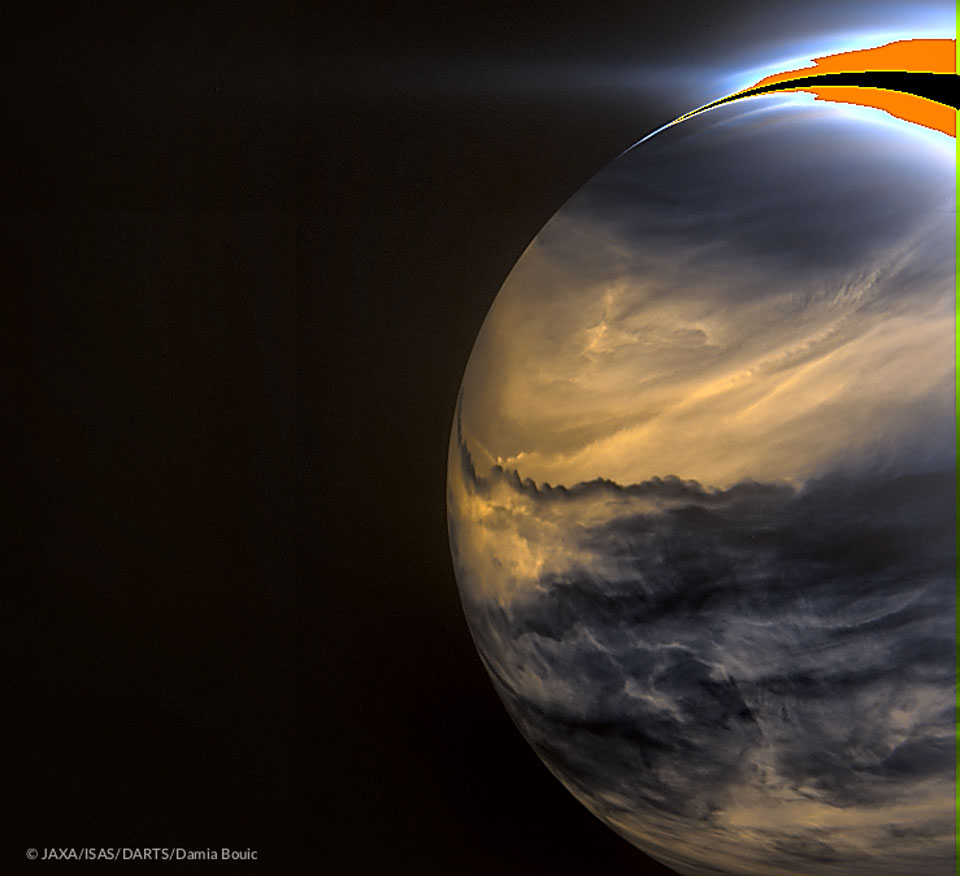
Venus at Night in Infrared from Akatsuki


Why is Venus so different from Earth? To help find out, Japan launched the robotic Akatsuki spacecraft which entered orbit around Venus late in 2015 after an unplanned five-year adventure around the inner Solar System. Even though Akatsuki was past its original planned lifetime, the spacecraft and instruments were operating so well that much of its original mission was reinstated. Also known as the Venus Climate Orbiter, Akatsuki's instruments investigated unknowns about Earth's sister planet, including whether volcanoes are still active, whether lightning occurs in the dense atmosphere, and why wind speeds greatly exceed the planet's rotation speed. In the featured image taken by Akatsuki's IR2 camera, Venus's night side shows a jagged-edged equatorial band of high dark clouds absorbing infrared light from hotter layers deeper in Venus' atmosphere. The bright orange and black stripe on the upper right is a false digital artifact that covers part of the much brighter day side of Venus. Analyses of Akatsuki images and data has shown that Venus has equatorial jet similar to Earth's jet stream. via NASA http://ift.tt/2DKlFVr

2018/01/29

Eroded Layers in Shalbatana Valles


Layers, probably sedimentary in origin, have undergone extensive erosion in this image from NASA's Mars Reconnaissance Orbiter (MRO) of Shalbatana Valles, a prominent channel that cuts through Xanthe Terra. via NASA http://ift.tt/2DWtLh3

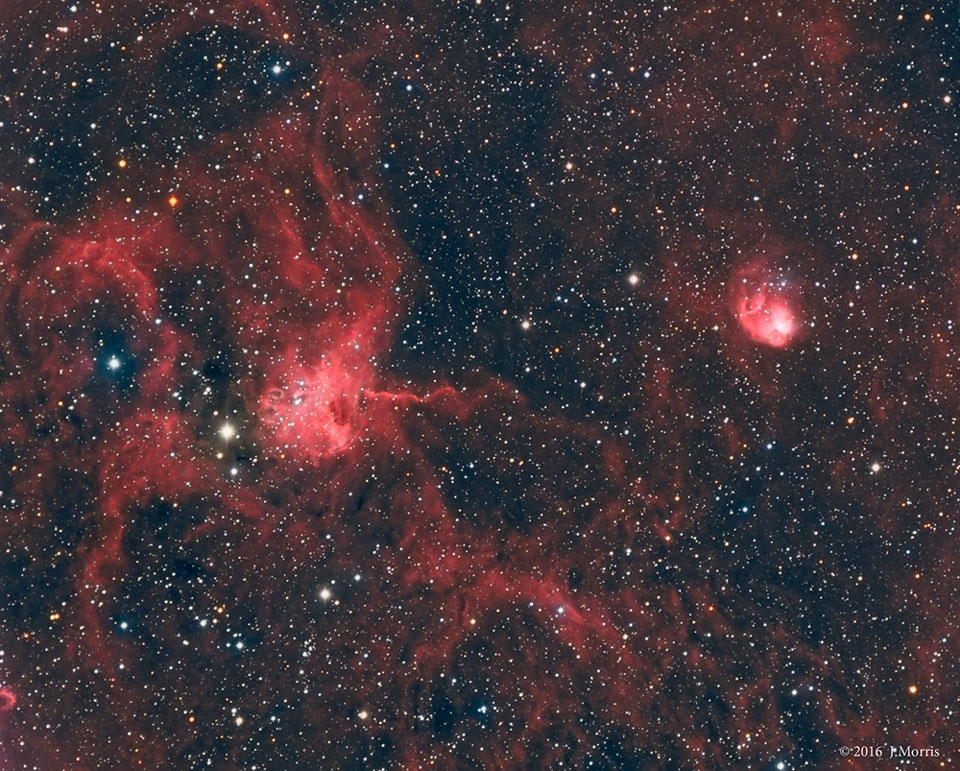
The Spider and The Fly


Will the spider ever catch the fly? Not if both are large emission nebulas toward the constellation of the Charioteer (Auriga). The spider-shaped gas cloud on the left is actually an emission nebula labelled IC 417, while the smaller fly-shaped cloud on the right is dubbed NGC 1931 and is both an emission nebula and a reflection nebula. About 10,000 light-years distant, both nebulas harbor young, open star clusters. For scale, the more compact NGC 1931 (Fly) is about 10 light-years across. via NASA http://ift.tt/2DHUQS2

2018/01/27

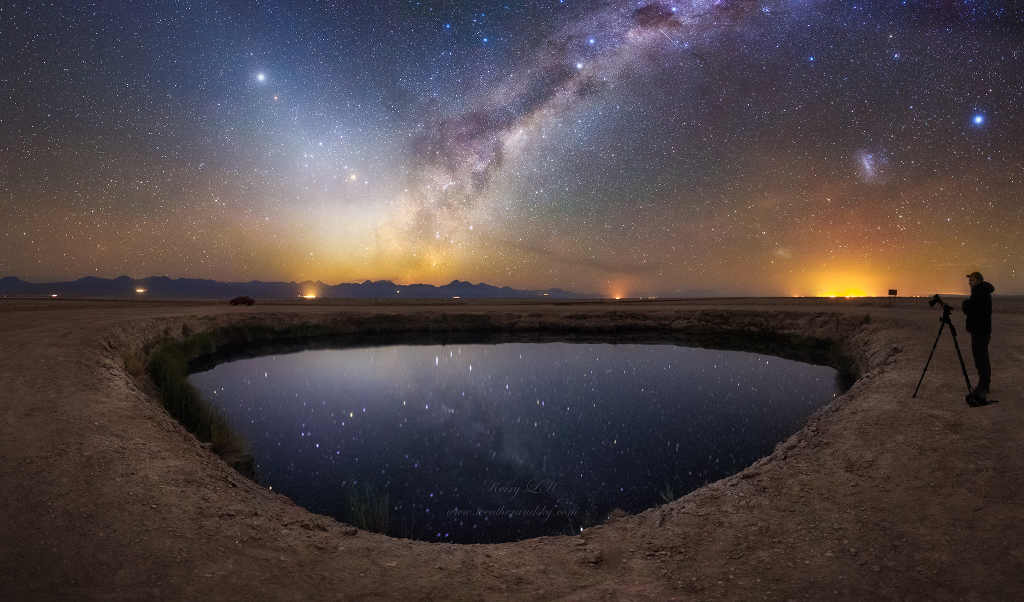
Laguna Starry Sky


Staring toward the heavens, one of the many lagunas in the Atacama Desert salt flat calmly reflects a starry night sky near San Pedro de Atacama, Chile, planet Earth. Cosmic rifts of dust, star clouds, and nebulae of the central Milky Way galaxy are rising in the east, beyond a volcanic horizon. Caught in the six frame panorama serenely recorded in the early morning hours of January 15, planets Jupiter and Mars are close. Near the ecliptic, the bright planets are immersed in the Solar System's visible band of Zodiacal light extending up and left from the galactic center. Above the horizon to the south (right) are the Large and Small clouds of Magellan, satellite galaxies of the Milky Way. via NASA http://ift.tt/2BxKAtz

2018/01/26

Mark Vande Hei's 'Space-Selfie'


On Tuesday, Jan. 23, 2018, spacewalker Mark Vande Hei snapped his own portrait, better known as a “space-selfie,” during the first spacewalk of the year. via NASA http://ift.tt/2ngOe66

2018/01/25

Day of Remembrance 2018


On the last Thursday in January, NASA pays tribute to the crews of Apollo 1 and space shuttles Challenger and Columbia, as well as other NASA colleagues who lost their lives while furthering the cause of exploration and discovery. via NASA http://ift.tt/2GiIbGQ

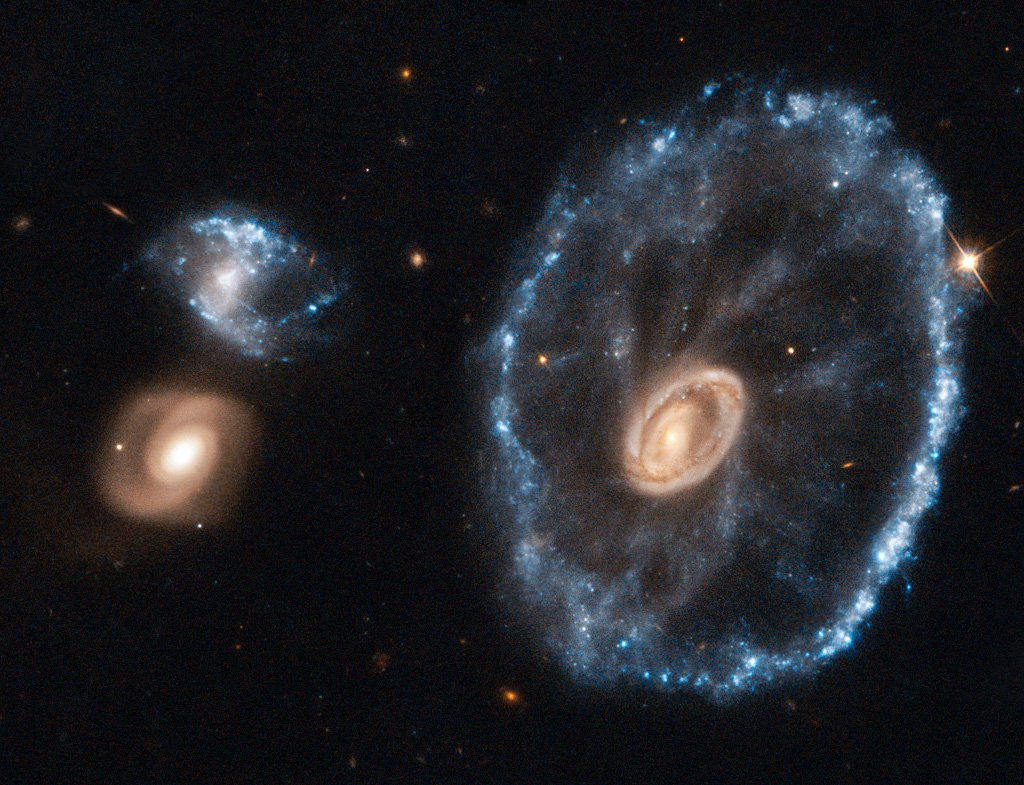
Cartwheel of Fortune


By chance, a collision of two galaxies has created a surprisingly recognizable shape on a cosmic scale, The Cartwheel Galaxy. The Cartwheel is part of a group of galaxies about 500 million light years away in the constellation Sculptor. Two smaller galaxies in the group are visible on the right. The Cartwheel Galaxy's rim is an immense ring-like structure 150,000 light years in diameter composed of newly formed, extremely bright, massive stars. When galaxies collide they pass through each other, their individual stars rarely coming into contact. Still, the galaxies' gravitational fields are seriously distorted by the collision. In fact, the ring-like shape is the result of the gravitational disruption caused by a small intruder galaxy passing through a large one, compressing the interstellar gas and dust and causing a a star formation wave to move out from the impact point like a ripple across the surface of a pond. In this case the large galaxy may have originally been a spiral, not unlike our own Milky Way, transformed into the wheel shape by the collision. But ... what happened to the small intruder galaxy? via NASA http://ift.tt/2DB4lGF

2018/01/24

Next Mars Lander Spreads Its Solar Wings


This image shows NASA's InSight lander after it was commanded to deploy its solar arrays to test and verify the exact process that it will use on the surface of the Red Planet. via NASA http://ift.tt/2n8D7Mx

2018/01/23

Signs of Ships in the Clouds


Ships churning through the Atlantic Ocean produced this patchwork of bright, criss-crossing cloud trails off the coast of Portugal and Spain. via NASA http://ift.tt/2rwOAuH

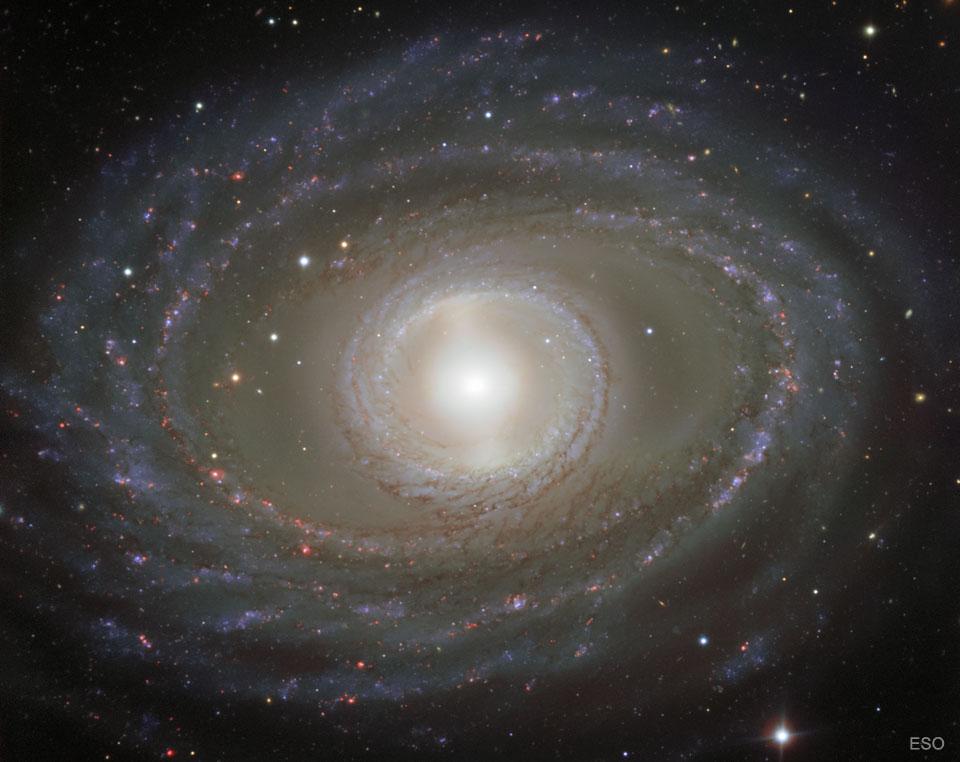
Ribbons and Pearls of Spiral Galaxy NGC 1398


Why do some spiral galaxies have a ring around the center? Spiral galaxy NGC 1398 not only has a ring of pearly stars, gas and dust around its center, but a bar of stars and gas across its center, and spiral arms that appear like ribbons farther out. The featured image was taken with ESO's Very Large Telescope at the Paranal Observatory in Chile and resolves this grand spiral in impressive detail. NGC 1398 lies about 65 million light years distant, meaning the light we see today left this galaxy when dinosaurs were disappearing from the Earth. The photogenic galaxy is visible with a small telescope toward the constellation of the Furnace (Fornax). The ring near the center is likely an expanding density wave of star formation, caused either by a gravitational encounter with another galaxy, or by the galaxy's own gravitational asymmetries. via NASA http://ift.tt/2G3GXiy

2018/01/22

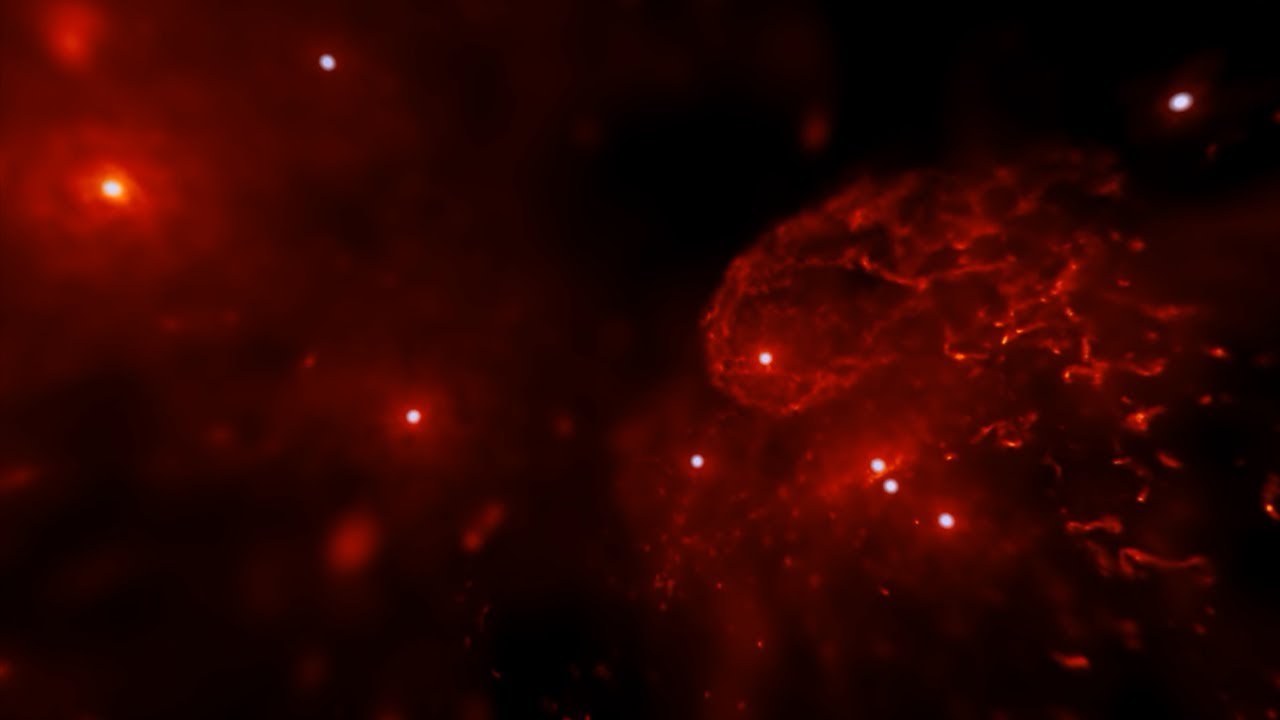
An Immersive Visualization of the Galactic Center


What if you could look out from the center of our Galaxy -- what might you see? Two scientifically-determined possibilities are shown in the featured video, an immersive 360-degree view which allows you to look around in every direction. The pictured computer simulation is based on infrared data from ESO's Very Large Telescope in Chile and X-ray data from NASA's orbiting Chandra X-ray Observatory. As the video starts, you quickly approach Sgr A*, the supermassive black hole in the Galactic center. Then looking out, this 500-year time-lapse simulation shows glowing gas and many points of light orbiting all around you. Many of these points are young Wolf-Rayet stars that have visible hot winds blowing out into surrounding nebulas. Clouds approaching close become elongated, while objects approaching too close fall in. Toward the video's end the simulation repeats, but this time with the dynamic region surrounding Sgr A* expelling hot gas that pushes back against approaching material. via NASA http://ift.tt/2BhIheh

2018/01/21

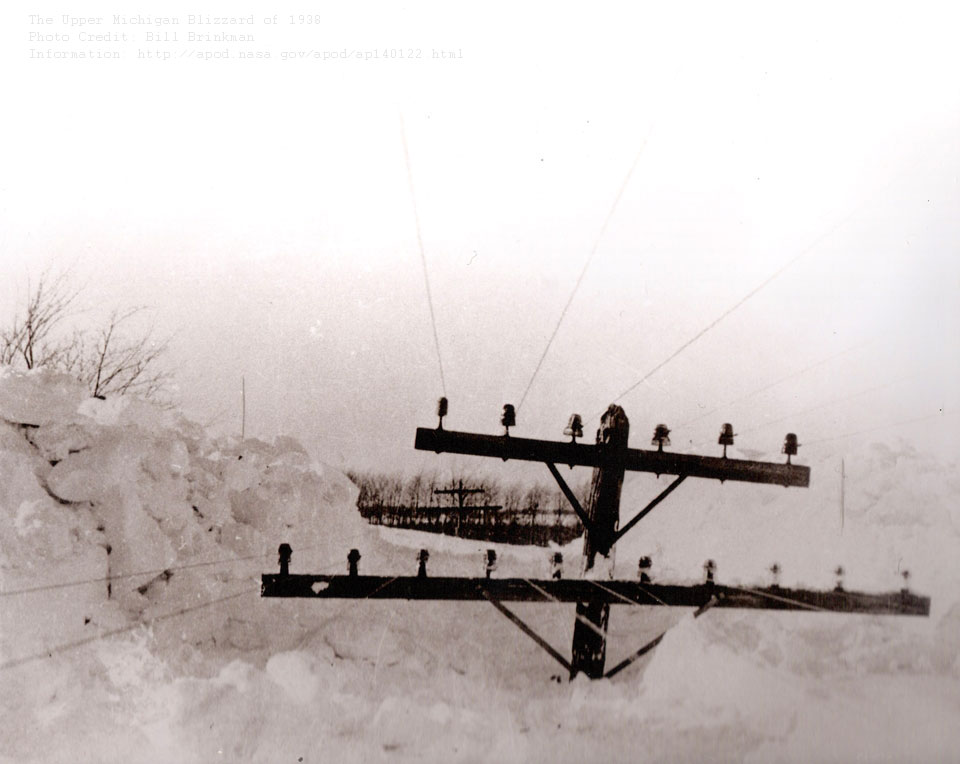
The Upper Michigan Blizzard of 1938


Yes, but can your blizzard do this? In Upper Michigan's Storm of the Century in 1938, some snow drifts reached the level of utility poles. Nearly a meter of new and unexpected snow fell over two days in a storm that started 80 years ago this week. As snow fell and gale-force winds piled snow to surreal heights; many roads became not only impassable but unplowable; people became stranded; cars, school buses and a train became mired; and even a dangerous fire raged. Fortunately only two people were killed, although some students were forced to spend several consecutive days at school. The featured image was taken by a local resident soon after the storm. Although all of this snow eventually melted, repeated snow storms like this help build lasting glaciers in snowy regions of our planet Earth. via NASA http://ift.tt/2rqTSYA

2018/01/20

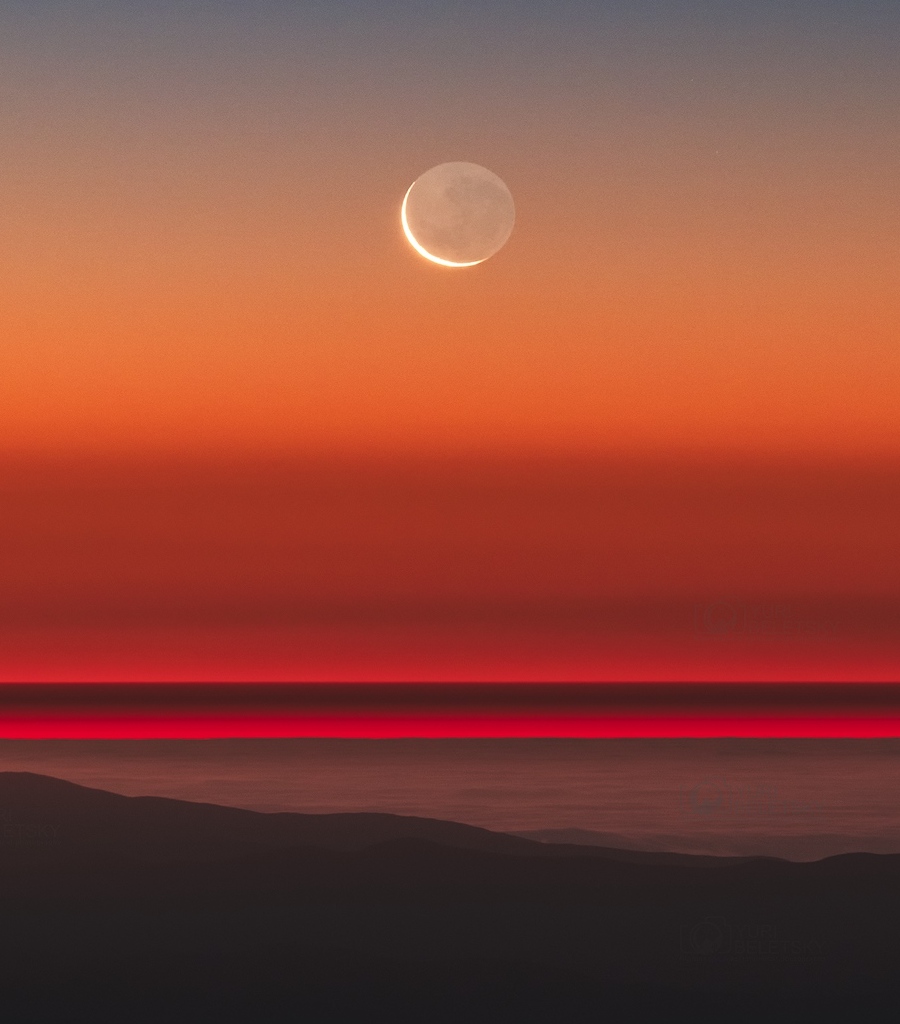
Old Moon in the New Moon s Arms


Also known as the Moon's "ashen glow" or the "Old Moon in the New Moon's arms", earthshine is earthlight reflected from the Moon's night side. This stunning image of earthshine from a young crescent moon was taken from Las Campanas Observatory, Atacama Desert, Chile, planet Earth near moonset on January 18. Dramatic atmospheric inversion layers appear above the Pacific Ocean, colored by the sunset at the planet's western horizon. But the view from the Moon would have been stunning, too. When the Moon appears in Earth's sky as a slender crescent, a dazzlingly bright, nearly full Earth would be seen from the lunar surface. A description of earthshine, in terms of sunlight reflected by Earth's oceans in turn illuminating the Moon's dark surface, was written 500 years ago by Leonardo da Vinci. via NASA http://ift.tt/2FXjHml

2018/01/19

Prepping the Parker Solar Probe for Space


At NASA's Goddard Space Flight Center, the Parker Solar Probe is lowered into the 40-foot-tall thermal vacuum chamber. The thermal vacuum chamber simulates the harsh conditions that the spacecraft will experience on its journey through space, including near-vacuum conditions and severe hot and cold temperatures. via NASA http://ift.tt/2Dl77LM

Clouds in the LMC


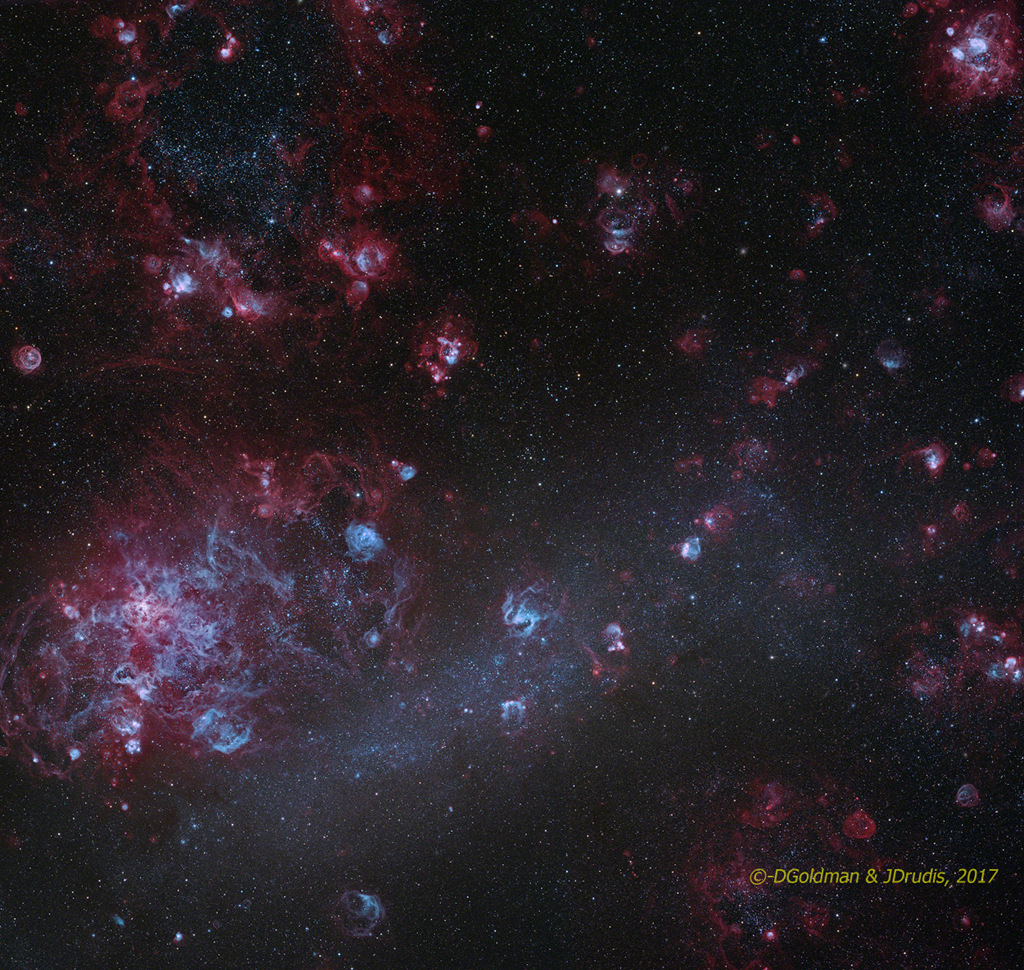
An alluring sight in southern skies, the Large Magellanic Cloud (LMC) is seen in this deep and detailed telescopic mosaic. Recorded with broadband and narrowband filters, the scene spans some 5 degrees or 10 full moons. The narrowband filters are designed to transmit only light emitted by hydrogen, and oxygen atoms. Ionized by energetic starlight, the atoms emit their characteristic light as electrons are recaptured and the atoms transition to a lower energy state. As a result, in this image the LMC seems covered with its own clouds of ionized gas surrounding its massive, young stars. Sculpted by the strong stellar winds and ultraviolet radiation, the glowing clouds, dominated by emission from hydrogen, are known as H II (ionized hydrogen) regions. Itself composed of many overlapping H II regions, the Tarantula Nebula is the large star forming region at the left. The largest satellite of our Milky Way Galaxy, the LMC is about 15,000 light-years across and lies a mere 160,000 light-years away toward the constellation Dorado. via NASA http://ift.tt/2Dm6ENt

2018/01/18

Jupiter’s Swirling South Pole


This image of Jupiter’s swirling south polar region was captured by NASA’s Juno spacecraft as it neared completion of its tenth close flyby of the gas giant planet. via NASA http://ift.tt/2mM8M68

2018/01/17

Even in the Desert


For the second time in three years, snow has accumulated in the desert near the northern Algerian town of Aïn Séfra. via NASA http://ift.tt/2FLXibp

In the Valley of Orion


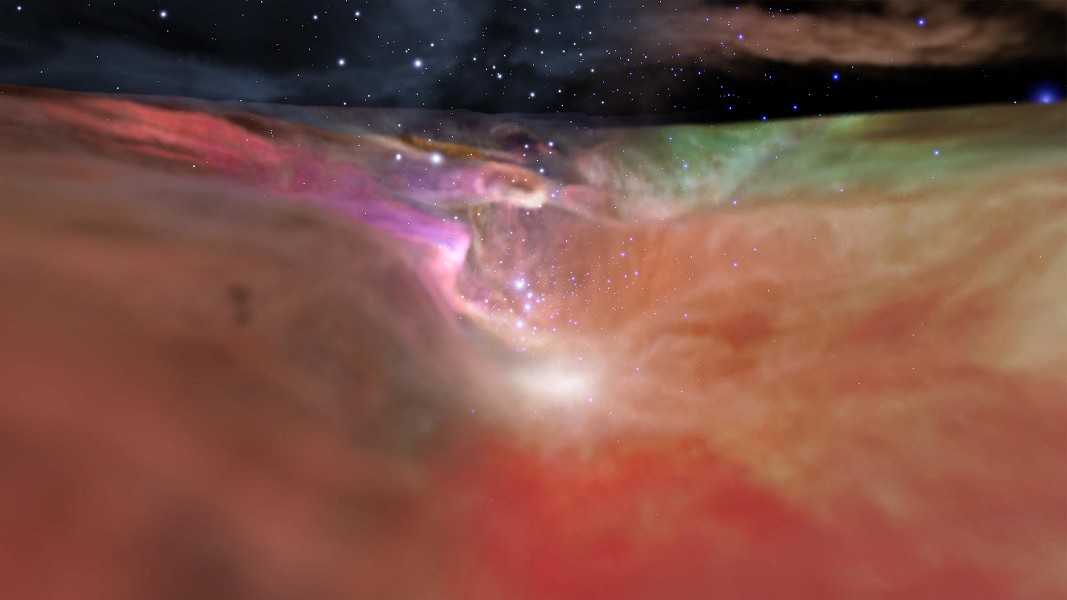
This exciting and unfamiliar view of the Orion Nebula is a visualization based on astronomical data and movie rendering techniques. Up close and personal with a famous stellar nursery normally seen from 1,500 light-years away, the digitally modeled frame transitions from a visible light representation based on Hubble data on the left to infrared data from the Spitzer Space Telescope on the right. The perspective at the center looks along a valley over a light-year wide, in the wall of the region's giant molecular cloud. Orion's valley ends in a cavity carved by the energetic winds and radiation of the massive central stars of the Trapezium star cluster. The single frame is part of a multiwavelength, three-dimensional video that lets the viewer experience an immersive, three minute flight through the Great Nebula of Orion. via NASA http://ift.tt/2B5EHUd

2018/01/16

Three of the 'Thirty-Five New Guys'


On January 16, 1978, NASA announces the first astronaut class in nine years, which included the first African Americans. via NASA http://ift.tt/2FHMDPa

2018/01/15

Rigel and the Witch Head Nebula


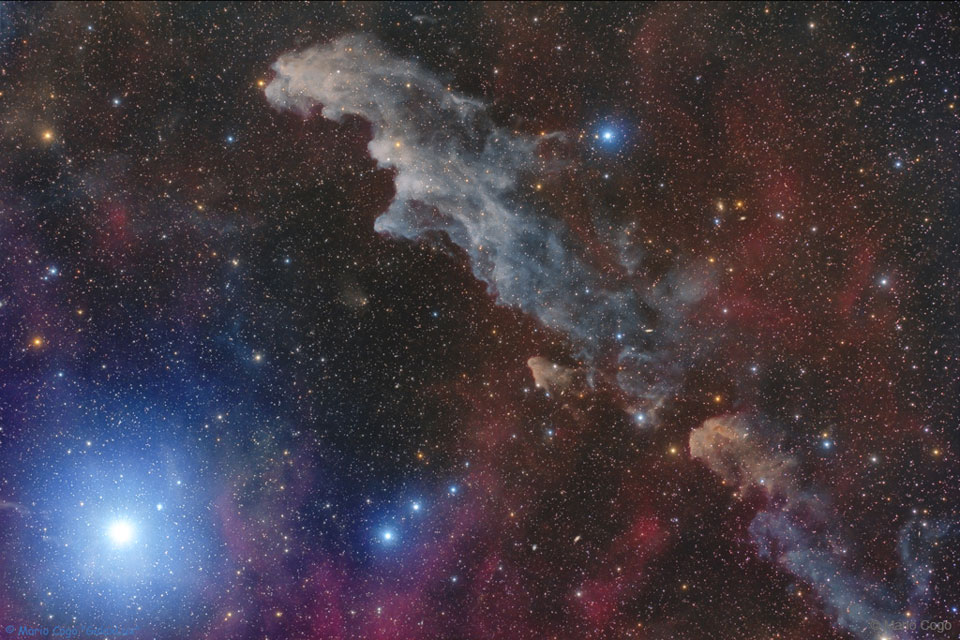
By starlight this eerie visage shines in the dark, a crooked profile evoking its popular name, the Witch Head Nebula. In fact, this entrancing telescopic portrait gives the impression that the witch has fixed her gaze on Orion's bright supergiant star Rigel. More formally known as IC 2118, the Witch Head Nebula spans about 50 light-years and is composed of interstellar dust grains reflecting Rigel's starlight. The blue color of the Witch Head Nebula and of the dust surrounding Rigel is caused not only by Rigel's intense blue starlight but because the dust grains scatter blue light more efficiently than red. The same physical process causes Earth's daytime sky to appear blue, although the scatterers in Earth's atmosphere are molecules of nitrogen and oxygen. Rigel, the Witch Head Nebula, and gas and dust that surrounds them lie about 800 light-years away. via NASA http://ift.tt/2DdfY5t

2018/01/12

Jupiter’s Colorful Cloud Belts


Colorful swirling cloud belts dominate Jupiter’s southern hemisphere in this image captured by NASA’s Juno spacecraft. via NASA http://ift.tt/2D6t9pP

Blue Comet PanSTARRS


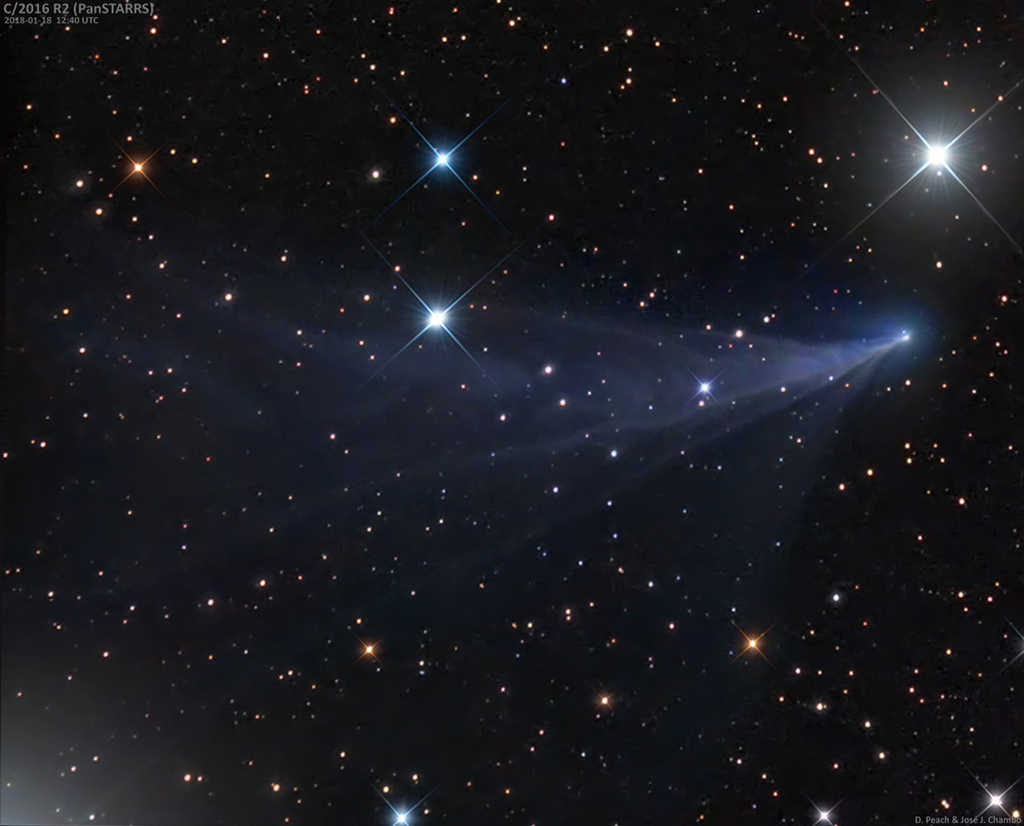
Discovered with the PanSTARRS telescope on September 7, 2016, this Comet PanSTARRS, C/2016 R2, is presently about 24 light minutes (3 AU) from the Sun, sweeping through planet Earth's skies across the background of stars in the constellation Taurus. An inbound visitor from our Solar System's distant Oort Cloud, its beautiful and complex ion tail is a remarkable shade of blue. Still relatively far from the Sun, the comet's already well-developed ion tail is very impressive. Emission from unusually abundant ionized carbon monoxide (CO+) atoms fluorescing in the increasing sunlight is largely responsible for the pretty blue tint. This color image of the blue comet is a combination of data taken from two different telescopes during the night of January 7. Located at the apex of the V-shaped Hyades star cluster in Taurus, bright star Gamma Tauri is responsible for the glow at the bottom left corner of the frame. via NASA http://ift.tt/2qQZf39

2018/01/11

All the Glittering Stars


A new analysis of about 10,000 normal Sun-like stars in the Milky Way's galactic bulge reveals that our galaxy's hub is a dynamic environment. via NASA http://ift.tt/2msTe80

2018/01/10

Now This: The Apollo 11 Crew


On Jan. 9, 1969, NASA announced the prime crew of the Apollo 11 lunar landing mission. This portrait was taken on Jan. 10, the day after the announcement of the crew assignment. From left to right are lunar module pilot Buzz Aldrin, commander Neil Armstrong; and command module pilot Michael Collins. via NASA http://ift.tt/2D1kpjU

NGC 2623: Merging Galaxies from Hubble


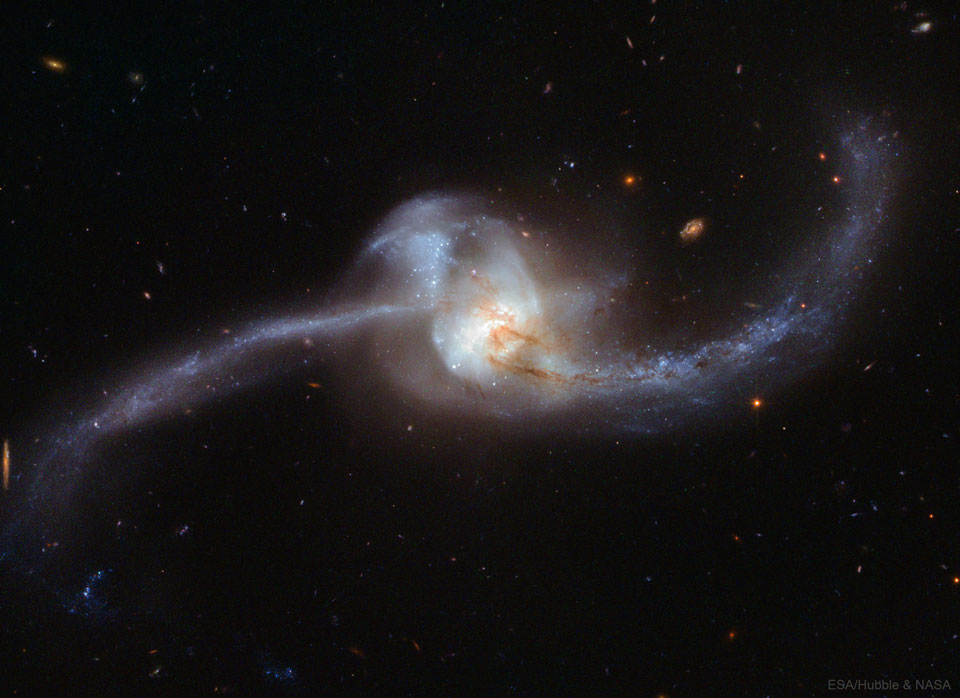
Where do stars form when galaxies collide? To help find out, astronomers imaged the nearby galaxy merger NGC 2623 in high resolution with the Hubble Space Telescope. Analysis of this and other Hubble images as well as images of NGC 2623 in infrared light by the Spitzer Space Telescope, in X-ray light by XMM-Newton, and in ultraviolet light by GALEX, indicate that two originally spiral galaxies appear now to be greatly convolved and that their cores have unified into one active galactic nucleus (AGN). Star formation continues around this core near the featured image center, along the stretched out tidal tails visible on either side, and perhaps surprisingly, in an off-nuclear region on the upper left where clusters of bright blue stars appear. Galaxy collisions can take hundreds of millions of years and take several gravitationally destructive passes. NGC 2623, also known as Arp 243, spans about 50,000 light years and lies about 250 million light years away toward the constellation of the Crab (Cancer). Reconstructing the original galaxies and how galaxy mergers happen is often challenging, sometimes impossible, but generally important to understanding how our universe evolved. via NASA http://ift.tt/2CVMj1y

2018/01/09

New Day


Sunrise as seen from the International Space Station. "A view of the sunrise from the ISS is a perfect start to a new day," so said @Anton_Astrey, otherwise known as cosmonaut Anton Shkaplerov, a member of the Expedition 54 crew aboard the International Space Station, orbiting 250 miles above the Earth. via NASA http://ift.tt/2qPs28i

2018/01/08

Veil of Ice


Saturn’s rings, made of countless icy particles, form a translucent veil in this view from NASA’s Cassini spacecraft. via NASA http://ift.tt/2D7ntZe

Clouds of Andromeda


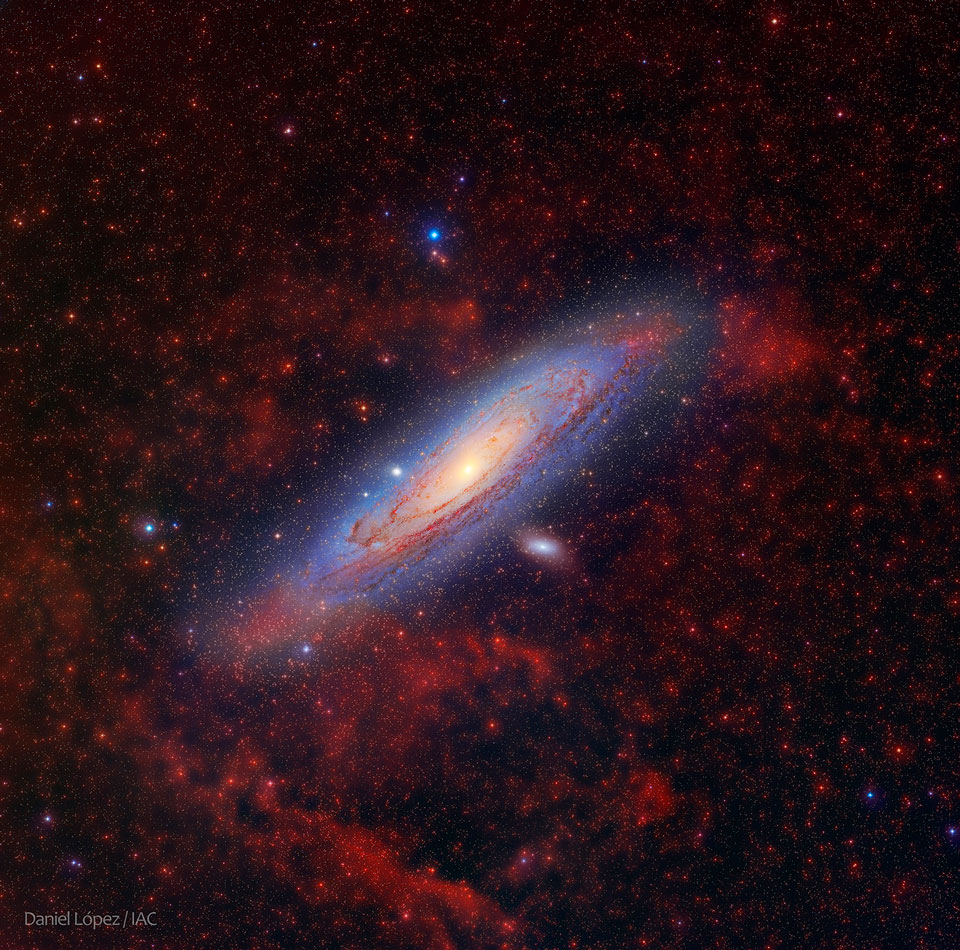
What are those red clouds surrounding the Andromeda galaxy? This galaxy, M31, is often imaged by planet Earth-based astronomers. As the nearest large spiral galaxy, it is a familiar sight with dark dust lanes, bright yellowish core, and spiral arms traced by clouds of bright blue stars. A mosaic of well-exposed broad and narrow-band image data, this colorful portrait of our neighboring island universe offers strikingly unfamiliar features though, faint reddish clouds of glowing ionized hydrogen gas in the same wide field of view. These ionized hydrogen clouds surely lie in the foreground of the scene, well within our Milky Way Galaxy. They are likely associated with the pervasive, dusty interstellar cirrus clouds scattered hundreds of light-years above our own galactic plane. via NASA http://ift.tt/2F6f74J

2018/01/05

Winter Storm Pummels the East Coast


Millions of people along the East Coast of the United States faced snow and ice, gusty winds, power outages, travel delays, school closings, and flooding as a rapidly-intensifying Nor’easter plowed northward during the first week of 2018. via NASA http://ift.tt/2qyLNAS

Carina over Lake Ballard


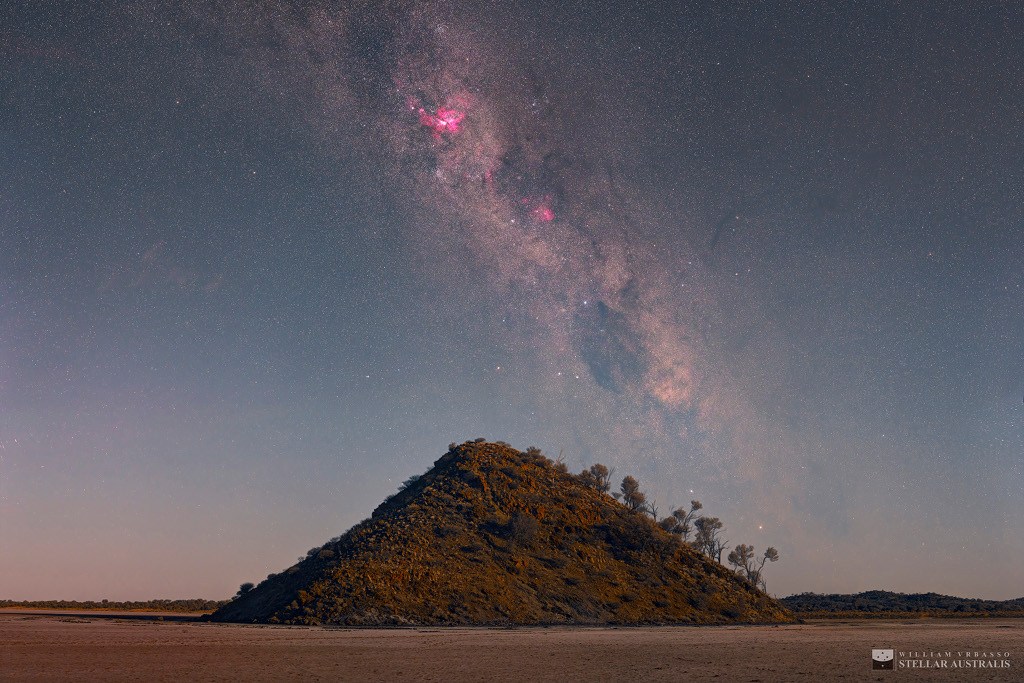
A jewel of the southern sky, the Great Carina Nebula, also known as NGC 3372, is one of our galaxy's largest star forming regions. Easily visible to the unaided eye it stands high above the signature hill of Lake Ballard, ephemeral salt lake of Western Australia, in this serene night skyscape from December 25, 2017. The Milky Way itself stretches beyond the southern horizon. Along the Milky Way, bright stars Alpha and Beta Centauri lie just above the hill's right flank, with the Southern Cross and dark Coalsack Nebula above the hill top. Based on a 22 panel mosaic, the scene was cropped to reveal more closely the beauty of this region of the southern Milky Way. On that short summer night, a star tracking camera mount was used to record the mosaic images of the sky, but turned off to image the foreground in moonlight. via NASA http://ift.tt/2AllL3u

2018/01/04

Geocolor Image From NOAA's GOES-16 Satellite of Powerful East Coast Storm


This Geocolor image from NOAA's GOES-16 satellite captures the deepening storm off the East coast of the United States on Jan. 4, 2018, at 16:22 UTC. The powerful nor'easter is battering coastal areas with heavy snow and strong winds, from Florida to Maine. via NASA http://ift.tt/2lVqWCY

2018/01/03

From Mercury Mark II to Project Gemini


On Jan. 3, 1962, the newly announced Mercury Mark II project was renamed Project Gemini. This artist's concept of a two-person Gemini spacecraft in flight shows a cutaway view. via NASA http://ift.tt/2Czgzz0

2018/01/02

From the Earth, Moon and Beyond


THE OSIRIS-REx mission will map and return samples from asteroid Bennu, a carbon-rich hunk of rock that might contain organic materials or molecular precursors to life. OSIRIS-Rex is expected to reach Bennu in August, 2018. via NASA http://ift.tt/2CFwXLi